This blog is for INDA students investigating the relationships between beliefs and buildings. This will be the digital venue for posting student work, commentary among students, and critiques.
Nice work Bung! Very interesting. Gimme more!!! __For example: when you map out Chula's green spaces and materials, you list the different trees along the left side of the document, but you do not show us where those particular trees are. Could you please map these onto the site plans? Also, what is important about these site plans is not only the location of the different trees, but, more importantly, the locations of the spirits that are in these different trees--so please map the beliefs about these trees onto the site. What is the site plan of the tree beliefs? Where are they? What are they? Put those in a visual plan depiction. __Also, you list a number of different trees, but are their spirits in each of these trees? If yes, what are they? What do those trees mean? How can you make the user of the site understand or experience these beliefs? __I do not agree with your dichotomy of 'fiction' vs 'fact.' Just because something is a fiction, it does not mean it is not real. People perform fictions all the time: the blessing of the tree before it is cut down, for example, may seem predicated on a fictitious idea--that the person can communicate his apology to the tree spirit--but the moment someone performs this gesture he makes that fiction real. He makes the belief real, even if the spirit is not. Your job in this studio is not to build for the spirits, but to build for the belief in the tree spirits. So, please find a way of VISUALLY cataloguing and representing the different rituals and practices people perform with trees--i.e. the physical behaviors that come from metaphysical beliefs __also the language on your 'fact vs fiction' page is not your own. You plagiarized the information. Re write it in your own words. And never call anyone 'savage;' that is both offensive and inaccurate. It begs the question, 'who is civilized?' Are sophisticated, educated and wealthy people of power 'civilized?' Poor, rural and uneducated 'savage'? This is the traditional association with these terms. But, ask yourself who produces more violence, more waste, more inequality, more injustice. The powerful, the ones typically associate with civilization, are almost always more savage than those who undeservedly receive this moniker. When Gandhi first visited England after becoming an activist in India, a reporter asked him "What do you think of western civilization?" Gandhi answered, "I think it is a good idea." He meant, it would be a good idea for the west to civilize itself. __on your last page you only show 4 varieties of cut woods and their attendant belief. Please show more. Also, draw out a visual diagram (not just a matrix) where you create a lexicon (dictionary) of the type of wood and the belief about that wood and start experimenting with how you can apply that would in a piece of architecture. Also, look at wood architecture in Thailand. When is it used in associate with what beliefs? What about Lahu use of bamboo? Ka-te? etc __Finally, please CHOOSE A SITE AND A PROGRAM. What are you going to build? Why? Where will it go? For what beliefs? How does your physical architecture foster metaphysical beliefs? Please post this work, AND A PHYSICAL CONCEPT MODEL OF YOUR BELIEFS, BY FRIDAY.

Nice work Bung! Very interesting. Gimme more!!!
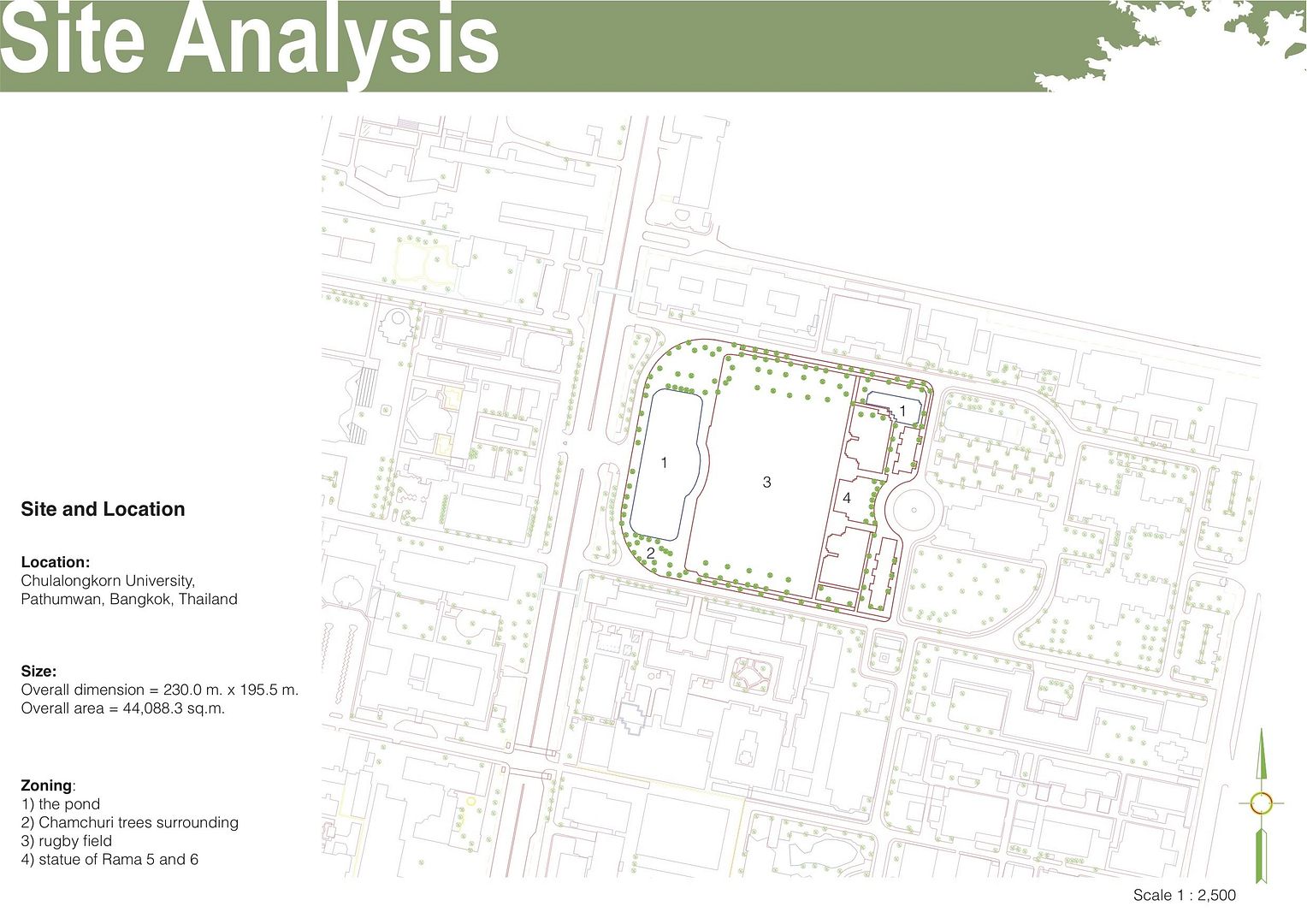
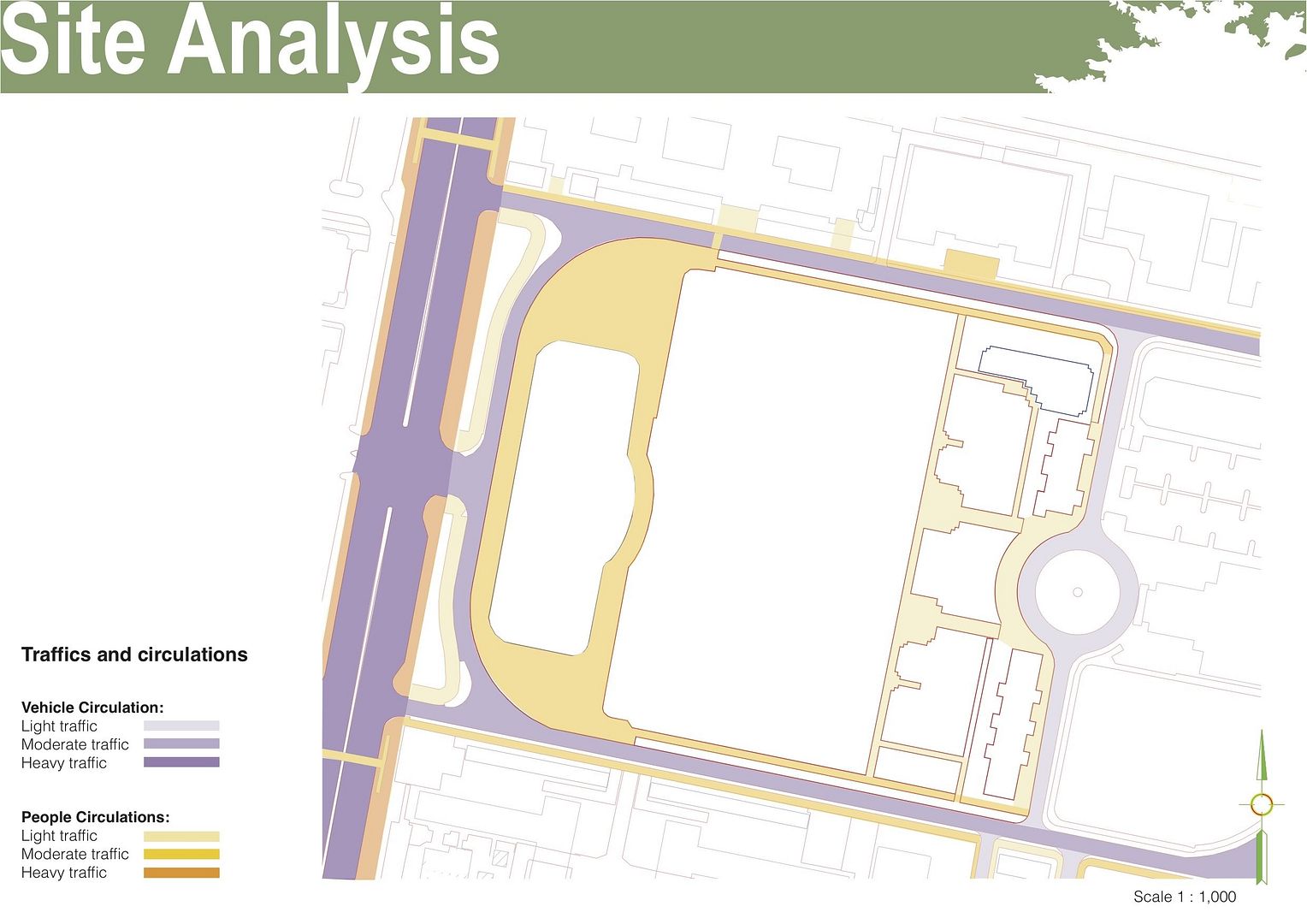
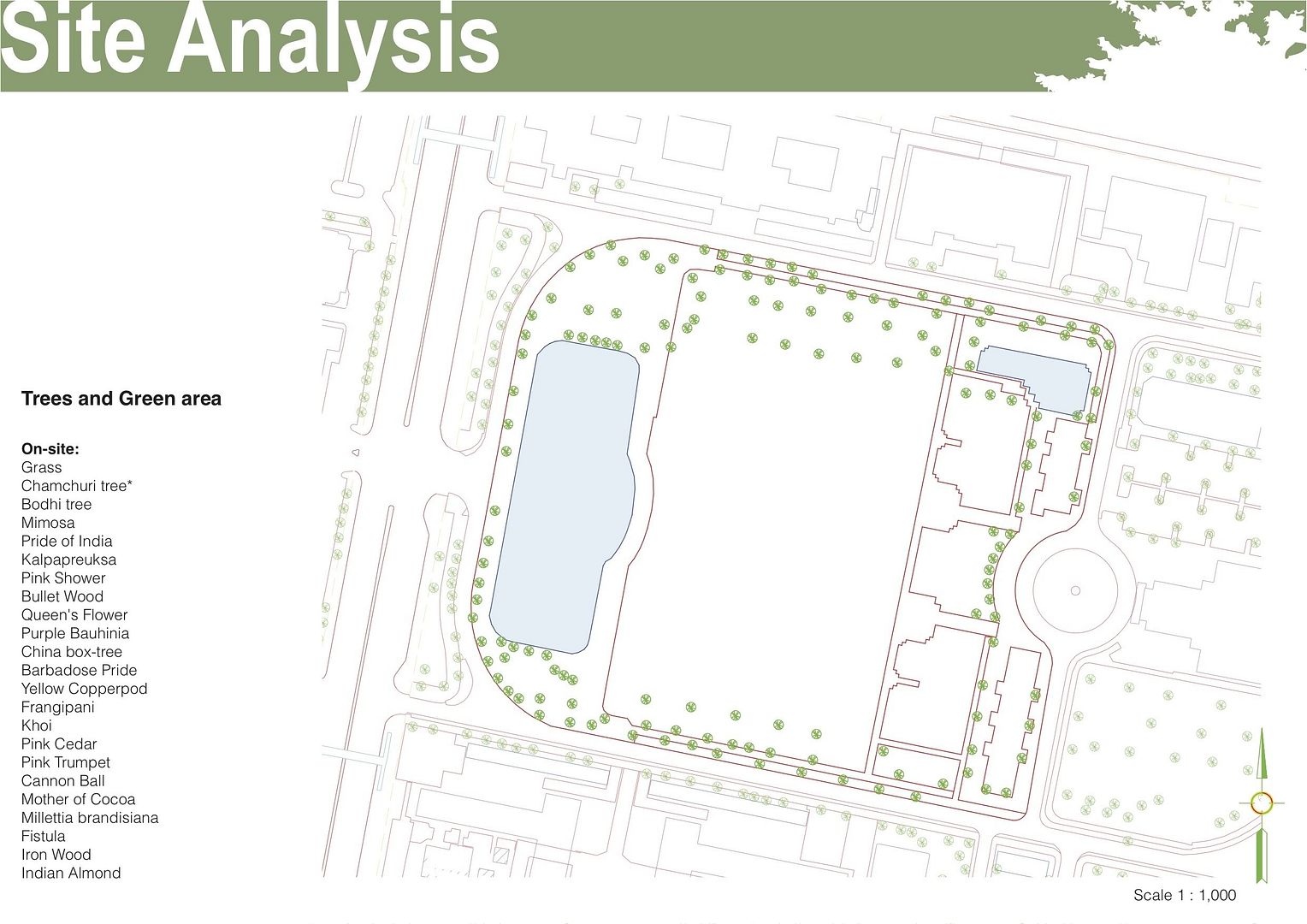
ReplyDelete__For example: when you map out Chula's green spaces and materials, you list the different trees along the left side of the document, but you do not show us where those particular trees are. Could you please map these onto the site plans? Also, what is important about these site plans is not only the location of the different trees, but, more importantly, the locations of the spirits that are in these different trees--so please map the beliefs about these trees onto the site. What is the site plan of the tree beliefs? Where are they? What are they? Put those in a visual plan depiction.
__Also, you list a number of different trees, but are their spirits in each of these trees? If yes, what are they? What do those trees mean? How can you make the user of the site understand or experience these beliefs?
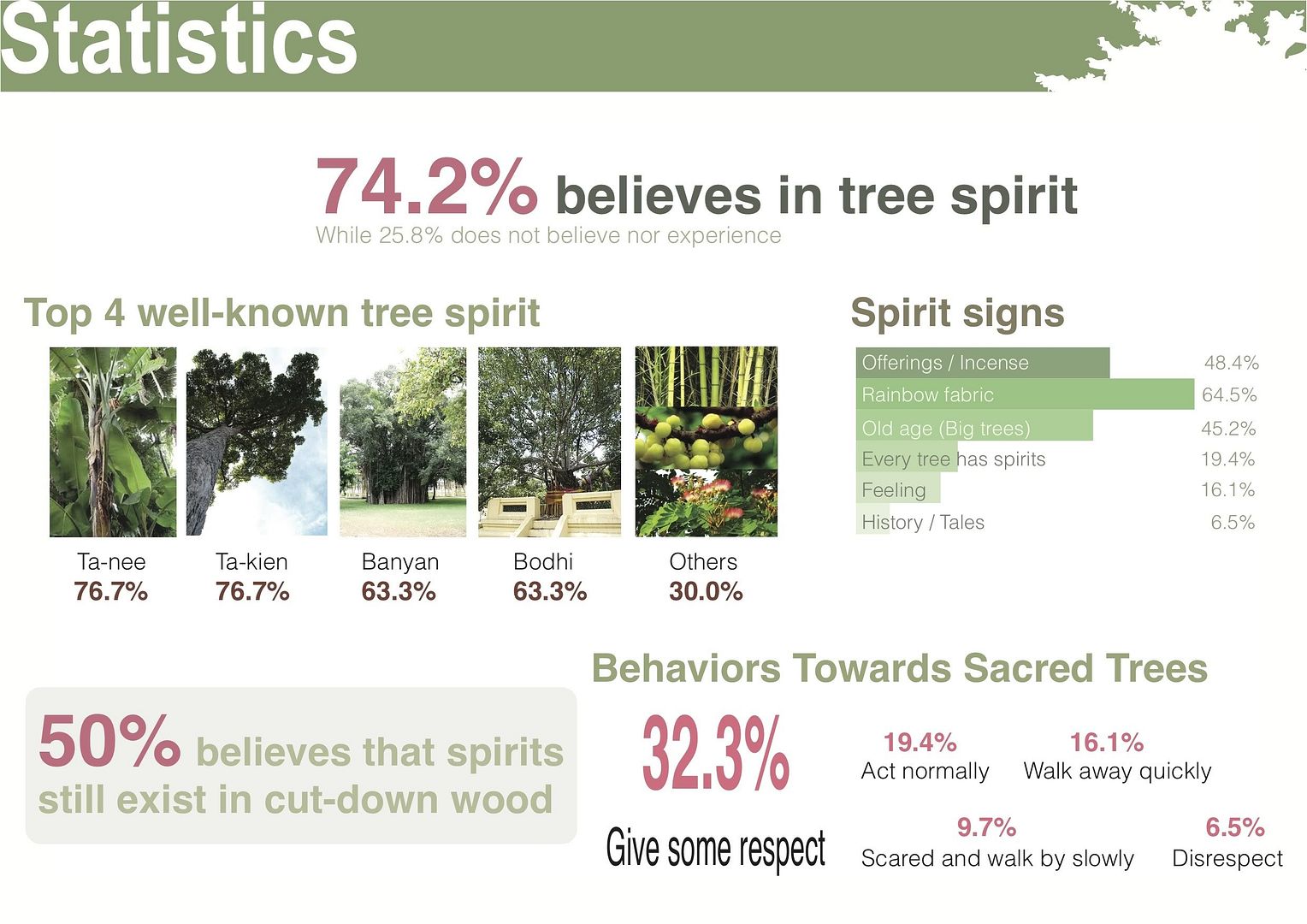
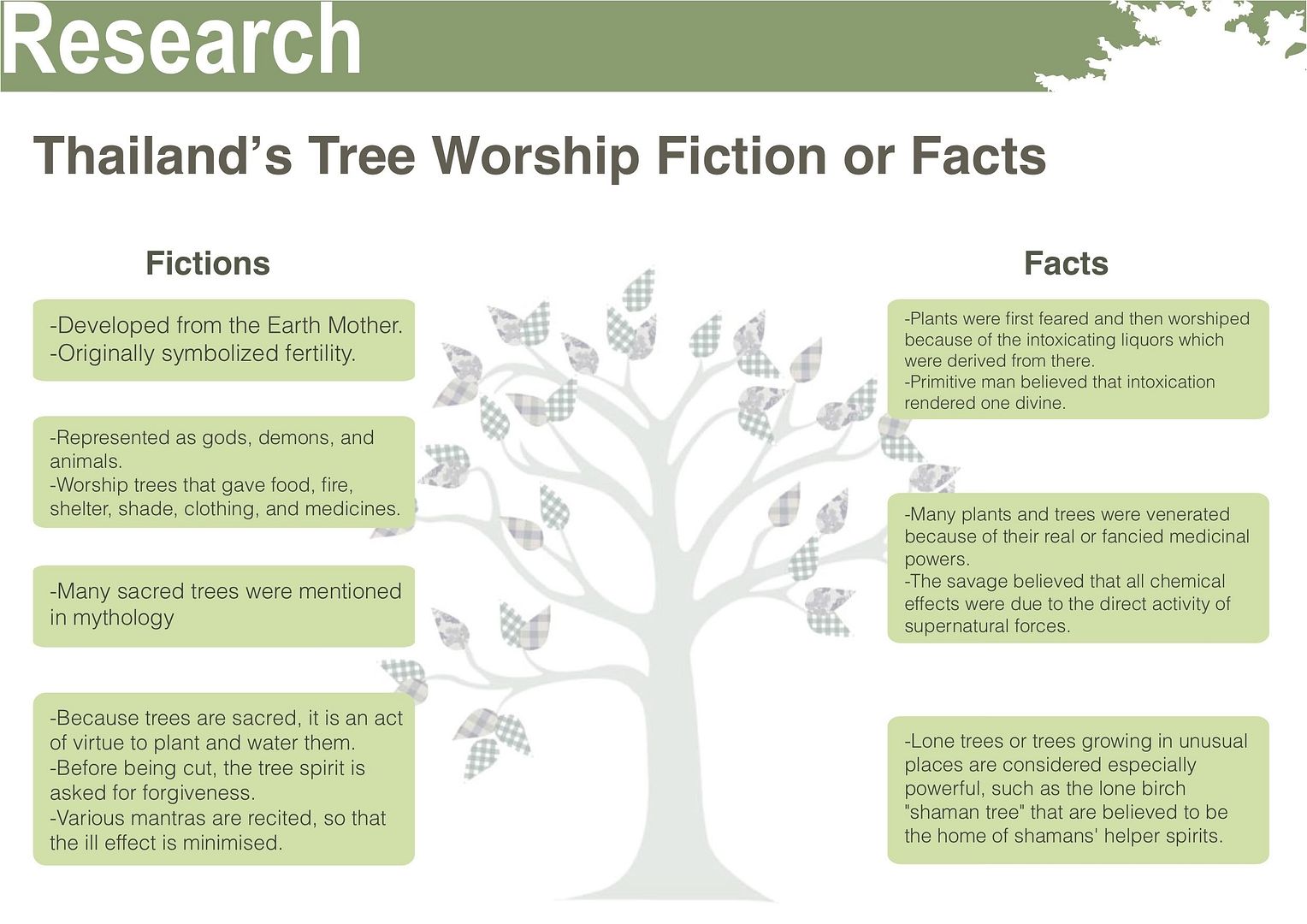
__I do not agree with your dichotomy of 'fiction' vs 'fact.' Just because something is a fiction, it does not mean it is not real. People perform fictions all the time: the blessing of the tree before it is cut down, for example, may seem predicated on a fictitious idea--that the person can communicate his apology to the tree spirit--but the moment someone performs this gesture he makes that fiction real. He makes the belief real, even if the spirit is not. Your job in this studio is not to build for the spirits, but to build for the belief in the tree spirits. So, please find a way of VISUALLY cataloguing and representing the different rituals and practices people perform with trees--i.e. the physical behaviors that come from metaphysical beliefs
__also the language on your 'fact vs fiction' page is not your own. You plagiarized the information. Re write it in your own words. And never call anyone 'savage;' that is both offensive and inaccurate. It begs the question, 'who is civilized?' Are sophisticated, educated and wealthy people of power 'civilized?' Poor, rural and uneducated 'savage'? This is the traditional association with these terms. But, ask yourself who produces more violence, more waste, more inequality, more injustice. The powerful, the ones typically associate with civilization, are almost always more savage than those who undeservedly receive this moniker. When Gandhi first visited England after becoming an activist in India, a reporter asked him "What do you think of western civilization?" Gandhi answered, "I think it is a good idea." He meant, it would be a good idea for the west to civilize itself.
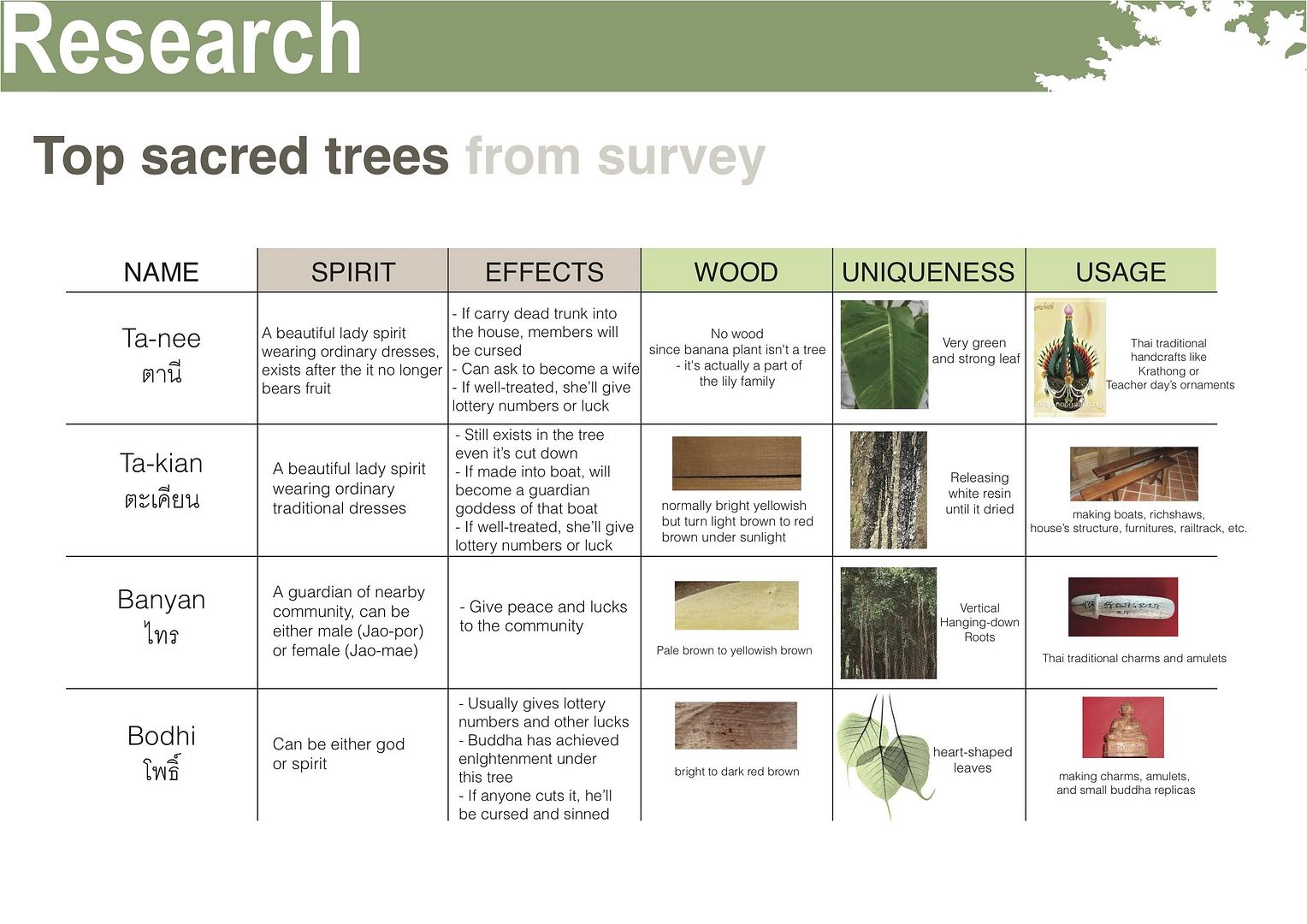
__on your last page you only show 4 varieties of cut woods and their attendant belief. Please show more. Also, draw out a visual diagram (not just a matrix) where you create a lexicon (dictionary) of the type of wood and the belief about that wood and start experimenting with how you can apply that would in a piece of architecture. Also, look at wood architecture in Thailand. When is it used in associate with what beliefs? What about Lahu use of bamboo? Ka-te? etc
__Finally, please CHOOSE A SITE AND A PROGRAM. What are you going to build? Why? Where will it go? For what beliefs? How does your physical architecture foster metaphysical beliefs? Please post this work, AND A PHYSICAL CONCEPT MODEL OF YOUR BELIEFS, BY FRIDAY.